

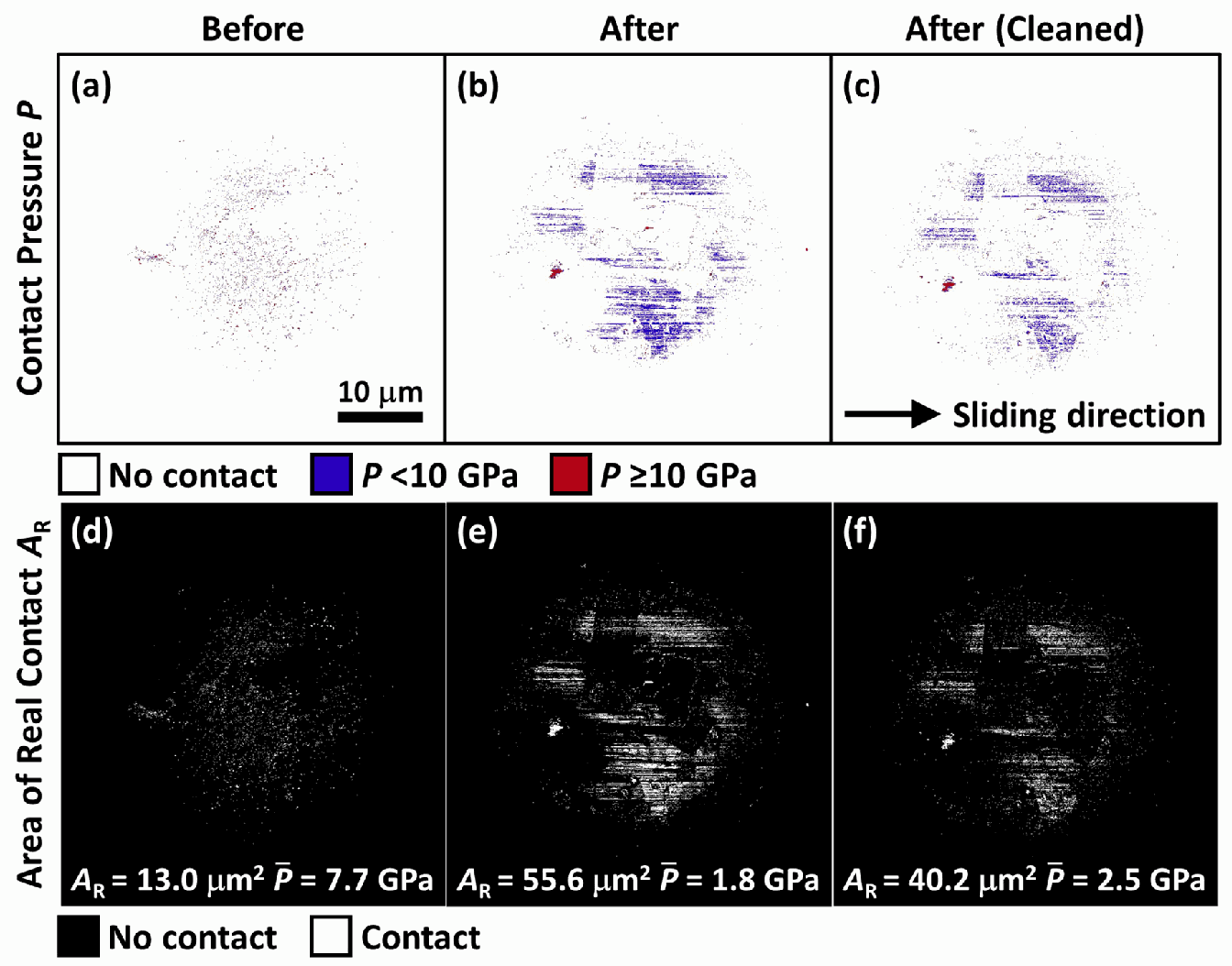
A new sliding contact changes as its highest asperities deform or wear away. This application note explains how a silicon carbide–silicon study connected measured surface changes with calculated pressure, real contact area and observed wear tracks. TriboSolver’s earlier generation supplied mechanical snapshots of the interface before and after sliding; it did not generate the complete wear trajectory. The article presents the reported material properties and calculation inputs, explains the reduction in mean pressure, and examines why simplified ploughing estimates underpredicted measured friction. The result is a practical example of using contact mechanics to interpret running-in while retaining the effects of debris, evolving counterface geometry and other processes outside the model.
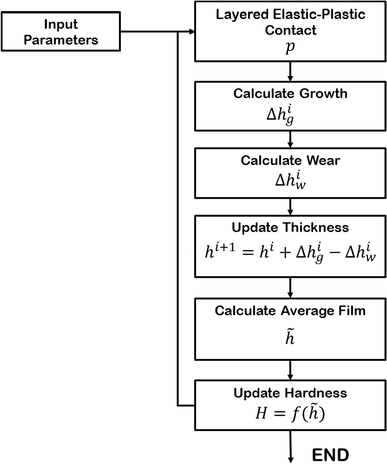
Protective tribofilms can grow and wear at the same time. This note explains a historical model that combined layered contact mechanics with stress-activated chemical growth and film removal. Comparisons covered an AFM-scale contact and rough steel contacts at several temperatures. The article identifies the inputs, explains why reduced contact pressure alone did not stop growth, and distinguishes removal of the film from loss of substrate material. It also presents the published substrate-wear comparison while making clear that its parameters were calibrated to experimental data. This is a research-history application note, not a current-software tutorial: the tribofilm-growth model described here is not presented as an available capability of the current TriboSolver release.
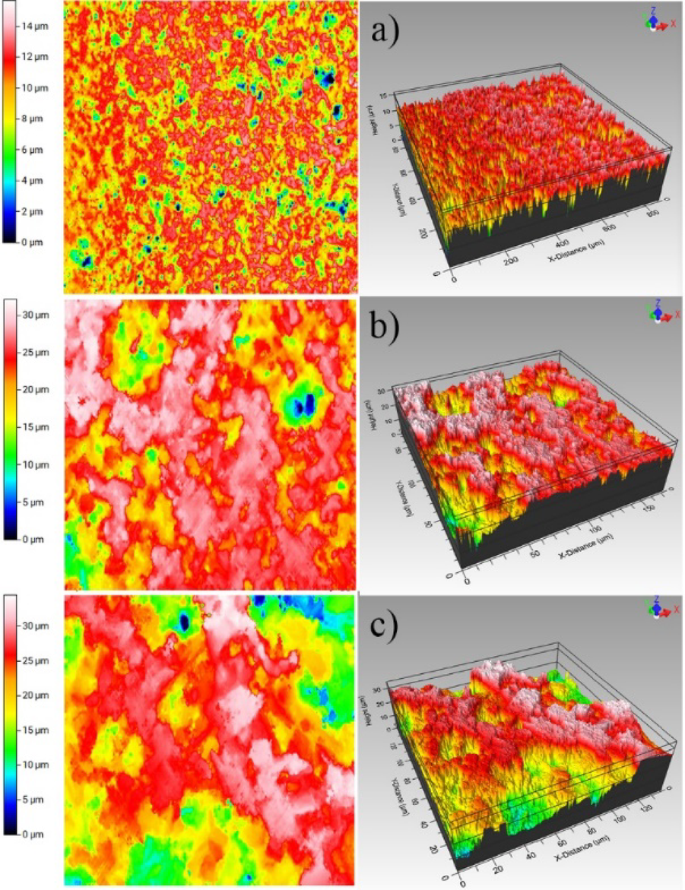
Surface roughness can change wear much more strongly than it changes friction. This note examines a ceramic-bead and alumina comparison in which TriboSolver supplied contact-pressure estimates for three surface finishes. It presents the reported pressures alongside measured friction and wear trends, explains why real contact area matters, and identifies the input information still needed for exact numerical reproduction. The article also separates this focused mechanical calculation from the paper’s wider experiments on cellulose suspensions and xanthan-gum solutions. Its central lesson is that contact modelling can provide useful mechanical context without directly predicting every observed wear track or lubricant effect. The distinction matters when assessing surface treatments.