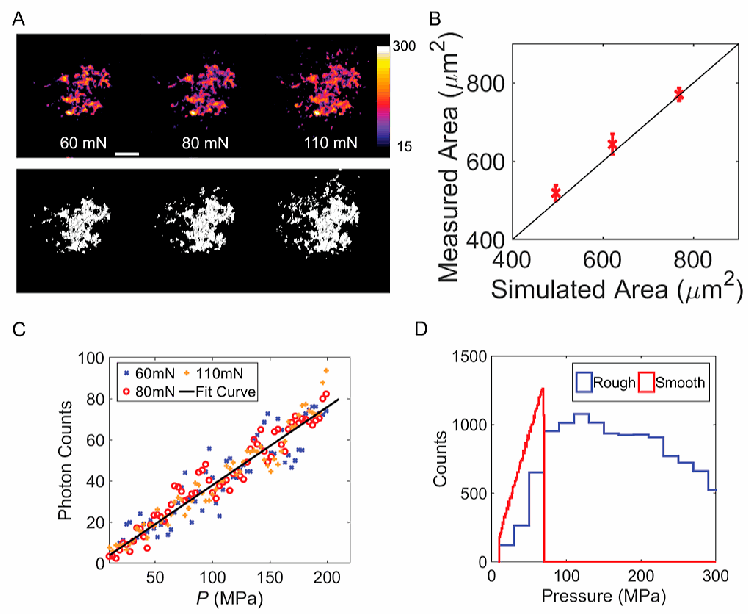
An optical contact image does not automatically reveal local pressure. This application note explains how a 2024 study combined a pressure-sensitive fluorescent probe with TriboSolver calculations for a rough polymer bead against glass. The authors compared contact areas and then separately calibrated fluorescence intensity against calculated pressure. The article explains that distinction, the role of measured surface topography and image alignment, and the reported contrast between rough and ideal smooth contacts. It also identifies the supporting-information inputs that still require verification before an exact reconstruction. The result is a guide to interpreting simulation-assisted contact measurements without treating a calibrated pressure map as an independent validation of the same mechanical calculation.