

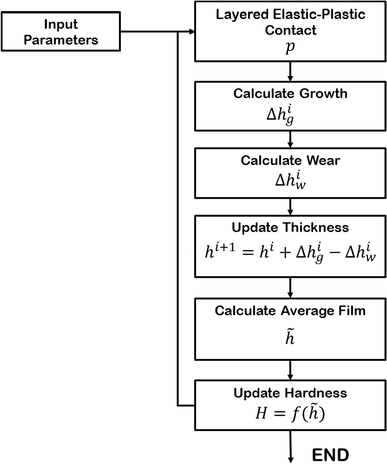
Protective tribofilms can grow and wear at the same time. This note explains a historical model that combined layered contact mechanics with stress-activated chemical growth and film removal. Comparisons covered an AFM-scale contact and rough steel contacts at several temperatures. The article identifies the inputs, explains why reduced contact pressure alone did not stop growth, and distinguishes removal of the film from loss of substrate material. It also presents the published substrate-wear comparison while making clear that its parameters were calibrated to experimental data. This is a research-history application note, not a current-software tutorial: the tribofilm-growth model described here is not presented as an available capability of the current TriboSolver release.
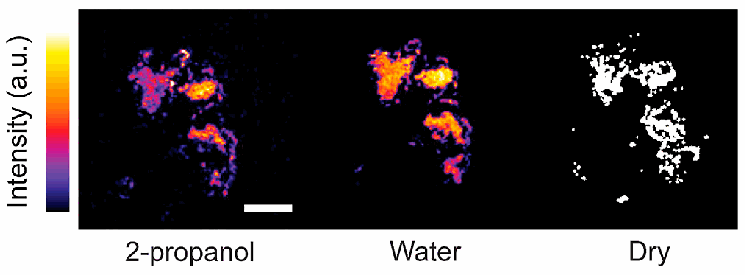
Lower friction can reflect a smaller contact area or an interface that is easier to shear. This note explains how a polypropylene–glass study separated those possibilities using fluorescence measurements and a dry TriboSolver contact calculation. The liquid-lubricated and dry contact areas differed only slightly, while the inferred mean shear stresses differed substantially. Separate vapor experiments then connected friction with molecular mobility and a thermally activated shear model. The article presents the reported mechanical comparison, distinguishes liquid controls from vapor measurements, and makes clear which molecular conclusions came from additional experiments rather than the solver. Supporting input parameters still require retrieval before an exact numerical reconstruction can be claimed.