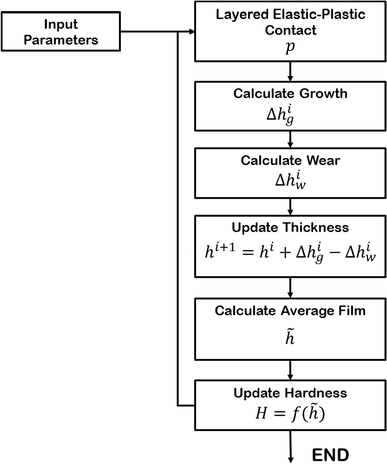
Protective tribofilms can grow and wear at the same time. This note explains a historical model that combined layered contact mechanics with stress-activated chemical growth and film removal. Comparisons covered an AFM-scale contact and rough steel contacts at several temperatures. The article identifies the inputs, explains why reduced contact pressure alone did not stop growth, and distinguishes removal of the film from loss of substrate material. It also presents the published substrate-wear comparison while making clear that its parameters were calibrated to experimental data. This is a research-history application note, not a current-software tutorial: the tribofilm-growth model described here is not presented as an available capability of the current TriboSolver release.