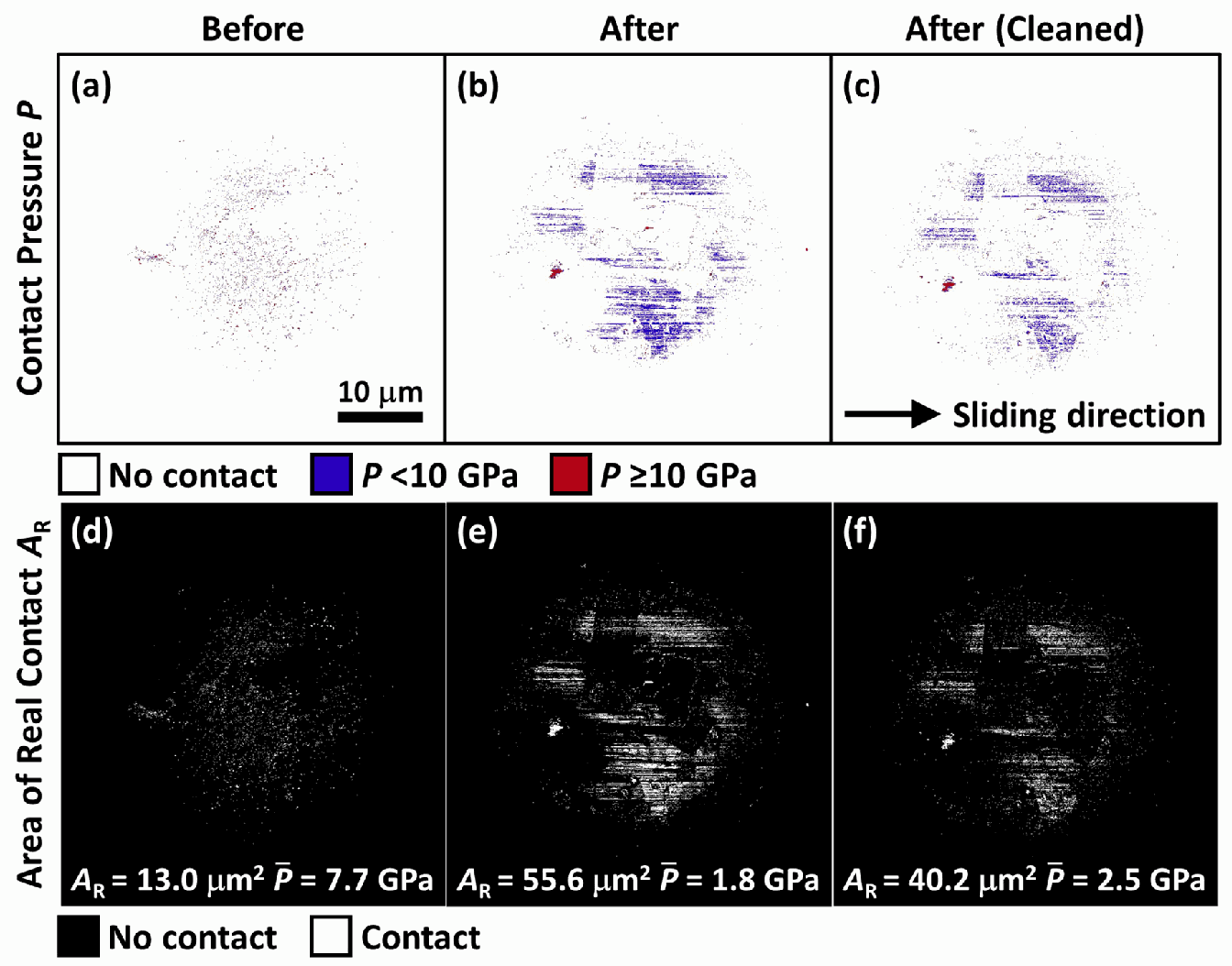
A new sliding contact changes as its highest asperities deform or wear away. This application note explains how a silicon carbide–silicon study connected measured surface changes with calculated pressure, real contact area and observed wear tracks. TriboSolver’s earlier generation supplied mechanical snapshots of the interface before and after sliding; it did not generate the complete wear trajectory. The article presents the reported material properties and calculation inputs, explains the reduction in mean pressure, and examines why simplified ploughing estimates underpredicted measured friction. The result is a practical example of using contact mechanics to interpret running-in while retaining the effects of debris, evolving counterface geometry and other processes outside the model.