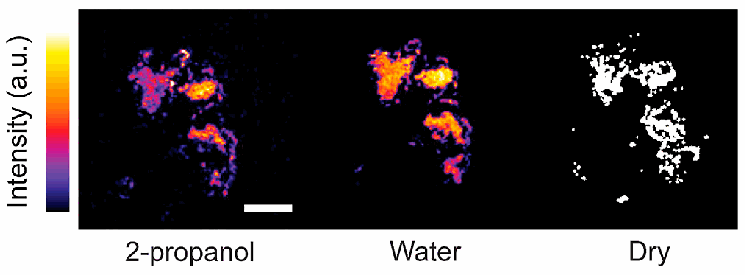
Lower friction can reflect a smaller contact area or an interface that is easier to shear. This note explains how a polypropylene–glass study separated those possibilities using fluorescence measurements and a dry TriboSolver contact calculation. The liquid-lubricated and dry contact areas differed only slightly, while the inferred mean shear stresses differed substantially. Separate vapor experiments then connected friction with molecular mobility and a thermally activated shear model. The article presents the reported mechanical comparison, distinguishes liquid controls from vapor measurements, and makes clear which molecular conclusions came from additional experiments rather than the solver. Supporting input parameters still require retrieval before an exact numerical reconstruction can be claimed.