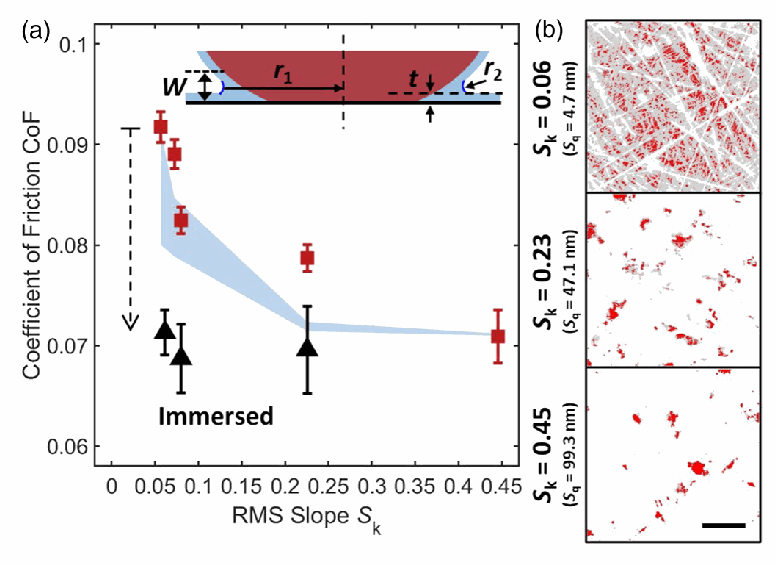
Polishing does not always reduce friction. In humid air, smoother surfaces can support larger regions of condensed water, creating an attractive force around the microscopic solid-contact spots. This application note explains a 2021 silicon nitride–sapphire study that combined measured topography, contact imaging, friction tests and numerical contact mechanics. TriboSolver’s earlier generation supplied real contact area and gap maps; the researchers then applied a separate capillary model. The article identifies the reported inputs, explains the distinction between solid-contact and wetted area, and shows why an approximately fourfold change in contact area produced a much smaller friction change. It also explains the assumptions and limits that matter when extending this workflow to another interface.